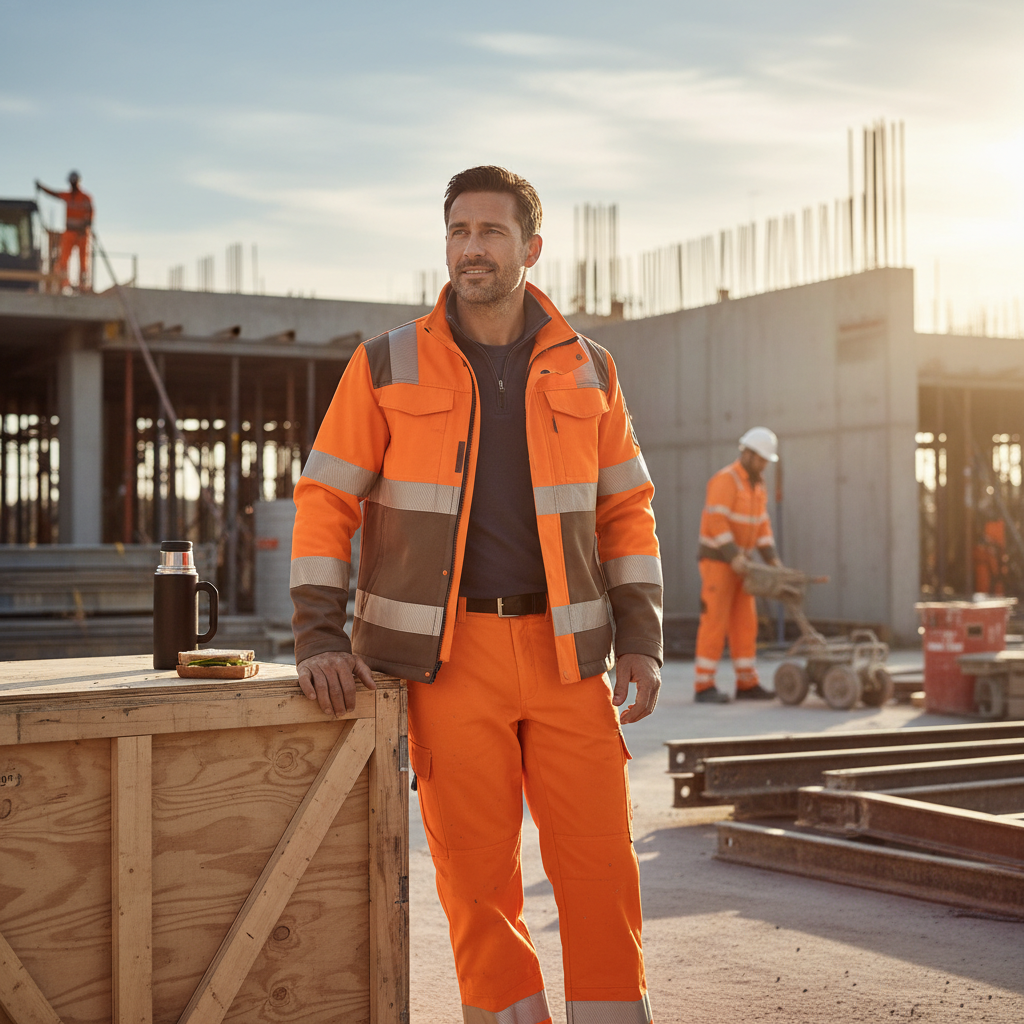
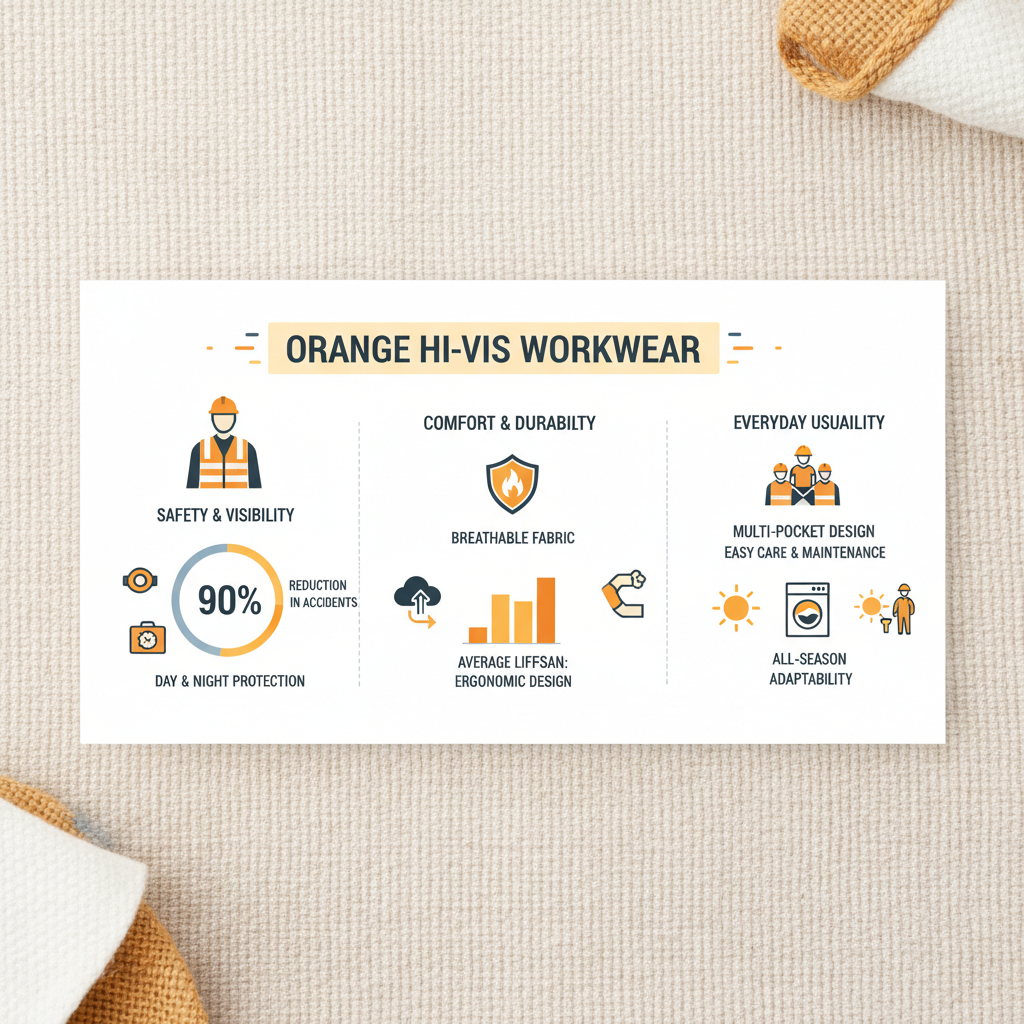
In the high-stakes environment of industrial workspaces, visibility is not just a preference—it is a critical safety requirement. orange hi vis workwear serves as the first line of defense for workers in construction, roadworks, and emergency services, ensuring that personnel are instantly recognizable against complex backgrounds. By leveraging high-contrast fluorescent pigments and retroreflective materials, these garments significantly reduce the risk of workplace accidents and fatalities.
Across the globe, the adoption of standardized safety apparel has transformed how we approach occupational health and safety. From the bustling infrastructure projects in Southeast Asia to the rigorous mining operations in Australia, the strategic use of orange hi vis workwear aligns with international safety benchmarks, such as ISO 20471. This ensures that regardless of the lighting conditions—be it the blinding glare of midday sun or the dimness of a rainy twilight—the wearer remains visible to vehicle operators and heavy machinery drivers.
Understanding the nuances of high-visibility clothing involves more than just choosing a bright color. It requires an analysis of fabric durability, the placement of reflective tapes, and the breathability of the textile to ensure worker comfort without compromising safety. In this comprehensive guide, we explore the technical dimensions, global applications, and future innovations of orange hi vis workwear to help safety managers and procurement officers make informed decisions.
The Global Significance of Orange Hi Vis Workwear
The global demand for orange hi vis workwear is driven by an increasing emphasis on worker protection and the proliferation of large-scale infrastructure projects worldwide. In many jurisdictions, wearing fluorescent orange is a legal mandate for road workers because this specific hue provides the highest contrast against green foliage and grey urban asphalt, reducing the "visual noise" that often leads to tragic collisions.
Beyond simple compliance, the adoption of high-visibility gear represents a shift toward a "safety-first" corporate culture. By implementing rigorous standards for orange hi vis workwear, companies not only protect their human capital but also mitigate the immense legal and financial risks associated with workplace accidents, creating a sustainable environment for industrial growth.
Defining the Technical Standards of High-Visibility Gear
At its core, orange hi vis workwear is a specialized garment engineered to make the wearer highly visible in various light conditions. Unlike standard clothing, these garments utilize fluorescent materials that convert invisible ultraviolet light into visible light, effectively making the wearer "glow" during the day. This is complemented by retroreflective tapes that bounce light from a source (like car headlights) directly back to the driver, creating a brilliant flash of light.
The technical definition is further refined by international standards like ANSI/ISEA 107 or EN ISO 20471, which categorize workwear into different "classes" based on the amount of fluorescent material and reflective tape used. For instance, Class 3 orange hi vis workwear is designed for high-risk environments where traffic speeds are high or visibility is severely limited, requiring full-body coverage to ensure the human silhouette is clearly identifiable.
In modern industry, this clothing is no longer viewed as a mere accessory but as a piece of Personal Protective Equipment (PPE). The integration of moisture-wicking fabrics, ripstop nylon, and weather-resistant coatings means that modern orange hi vis workwear provides both safety and functional utility, allowing workers to perform their duties comfortably in extreme climates.
Core Components for Maximum Safety Performance
The efficacy of orange hi vis workwear relies on the synergy between three core components: the base fluorescent fabric, the retroreflective strips, and the ergonomic design. The base fabric must maintain its color fastness against UV radiation to prevent fading, as a faded orange garment loses its life-saving contrast.
Durability is a paramount factor; therefore, premium orange hi vis workwear often employs reinforced stitching and abrasion-resistant blends. This ensures that the garment does not tear easily in rugged environments, maintaining the integrity of the safety zones and ensuring that the reflective tapes remain securely attached even after hundreds of industrial wash cycles.
Finally, the placement of the reflective elements is scientifically calculated. By placing tapes in a "hoop" or "cross" pattern on the orange hi vis workwear, the garment defines the human form, allowing a driver to instantly recognize that the object in the road is a person and not a traffic cone or a sign, providing the critical split-second needed to brake.
Measuring the Efficacy of Visibility Solutions
Evaluating the performance of orange hi vis workwear requires looking at a combination of luminance, contrast, and longevity. Companies often test different material blends to see which offers the best balance between "breathability" for the worker and "brightness" for the observer. This data-driven approach ensures that safety gear doesn't become a burden that workers are tempted to remove in hot weather.
When comparing different types of orange hi vis workwear, metrics such as the coefficient of retroreflection and the chromaticity coordinates of the fluorescent orange are used to ensure global standardization.
Performance Comparison of Orange Hi Vis Workwear Types
Global Applications Across Critical Industries
The application of orange hi vis workwear spans a diverse array of sectors. In the aviation industry, ground crew members rely on these garments to remain visible to pilots and taxiing aircraft, where a single oversight can lead to catastrophic runway incursions. Similarly, in railway maintenance, workers operate in low-light tunnels or during night shifts, making the reflective properties of their gear a literal lifeline.
Beyond heavy industry, orange hi vis workwear is indispensable in disaster relief and humanitarian operations. In the aftermath of earthquakes or floods, search-and-rescue teams use bright orange gear to be easily spotted by helicopters and drone operators, facilitating the efficient coordination of aid and the safe extraction of survivors from remote industrial zones.
Long-Term Value and Social Impact of Safety Apparel
Investing in high-quality orange hi vis workwear provides a tangible return on investment by drastically lowering the incidence of occupational injuries. From a logical perspective, the cost of premium safety apparel is negligible compared to the costs of medical leave, insurance premiums, and potential litigation resulting from a lack of visibility.
Emotionally, providing workers with top-tier orange hi vis workwear signals a company's commitment to the dignity and well-being of its employees. When a worker feels seen and protected, their confidence and productivity increase, fostering a culture of trust and mutual respect between the workforce and management.
Furthermore, the standardization of this gear creates a universal language of safety. Whether in a shipyard in Singapore or a highway project in Germany, the sight of orange hi vis workwear instantly communicates "caution" and "human presence," transcending linguistic barriers and ensuring safety in globalized work environments.
Future Innovations in High-Visibility Textiles
The future of orange hi vis workwear is being shaped by the intersection of textile science and digital technology. We are seeing the emergence of "smart" fabrics that can integrate LED lighting or sensors that alert a worker when they have entered a danger zone. These active visibility systems complement the passive visibility of fluorescent dyes, providing an additional layer of protection.
Sustainability is also becoming a core driver. The next generation of orange hi vis workwear is moving toward recycled polyesters and biodegradable dyes to reduce the environmental footprint of PPE. This transition ensures that protecting the worker does not come at the cost of protecting the planet.
Moreover, the integration of nanotechnology is allowing for fabrics that are permanently stain-resistant and hydrophobic, ensuring that orange hi vis workwear remains bright and clean even in the muddiest construction sites, thereby preserving its visibility efficacy for longer periods.
Technical Analysis of Orange Hi Vis Workwear Material Standards
| Material Type |
Visibility Rating |
Durability Score |
Best Application |
| Fluorescent Polyester |
9/10 |
7/10 |
General Construction |
| Heavy-Duty Nylon |
8/10 |
9/10 |
Mining & Forestry |
| Breathable Mesh |
8/10 |
5/10 |
Summer Roadworks |
| Waterproof Laminate |
9/10 |
8/10 |
Marine & Rain Environments |
| Flame Retardant Blend |
7/10 |
10/10 |
Oil & Gas Refineries |
| Recycled Eco-Poly |
8/10 |
7/10 |
Urban Utility Work |
FAQS
Orange is often preferred in environments with heavy greenery or urban landscapes because it provides a stronger contrast against those specific backgrounds. While yellow-green is excellent for low-light urban settings, orange is the standard for roadworks and forestry to ensure workers don't blend into the natural scenery, maximizing the safety efficacy of the orange hi vis workwear.
Replacement depends on the wear and tear, but typically, garments should be inspected monthly. If the fluorescent color has faded or the reflective tapes are cracked or peeling, the orange hi vis workwear no longer meets safety standards and must be replaced. In high-intensity industrial environments, a full replacement every 6-12 months is common to ensure peak visibility.
Yes, improper washing can degrade both the fluorescent dyes and the retroreflective beads. It is recommended to wash orange hi vis workwear using mild detergents and avoiding bleach. Using a tumble dryer on high heat can also melt the reflective tapes, so air drying or low-heat settings are advised to prolong the life of the garment.
The primary difference is the amount of visible material. Class 2 is suitable for moderate risk (e.g., parking lot attendants), while Class 3 is for high-risk environments (e.g., high-speed highways). Class 3 orange hi vis workwear typically includes sleeves and more reflective tape to provide the highest possible visibility of the human silhouette from all angles.
No. Professional orange hi vis workwear is engineered with specific chromaticity and retroreflectivity standards (like ISO 20471). A standard orange jacket may look bright but lacks the fluorescent properties to be visible in low light and the reflective properties to bounce light back to drivers, which can lead to dangerous safety gaps.
Absolutely. Many manufacturers now offer lightweight polyester mesh or moisture-wicking blends specifically for summer use. These versions of orange hi vis workwear maintain the necessary safety standards while allowing air circulation, preventing heat stress for workers in tropical or high-temperature environments.
Conclusion
In summary, orange hi vis workwear is an indispensable tool in the modern industrial arsenal, combining the physics of light with the science of textile engineering to save lives. From the critical importance of color contrast and retroreflective placement to the adherence to international safety classes, every detail of these garments is designed to mitigate risk and ensure that every worker returns home safely at the end of their shift.
As we look toward a future of smart textiles and sustainable manufacturing, the role of high-visibility apparel will only grow more sophisticated. We encourage safety managers and procurement officers to prioritize quality and certification over cost, as the long-term value of premium orange hi vis workwear lies in its reliability and the peace of mind it brings to the workforce. For industry-leading safety solutions, visit our website: www.jidegarment.com