
Field Notes on a Modern Classic: Women’s Double Breasted Trench Coat
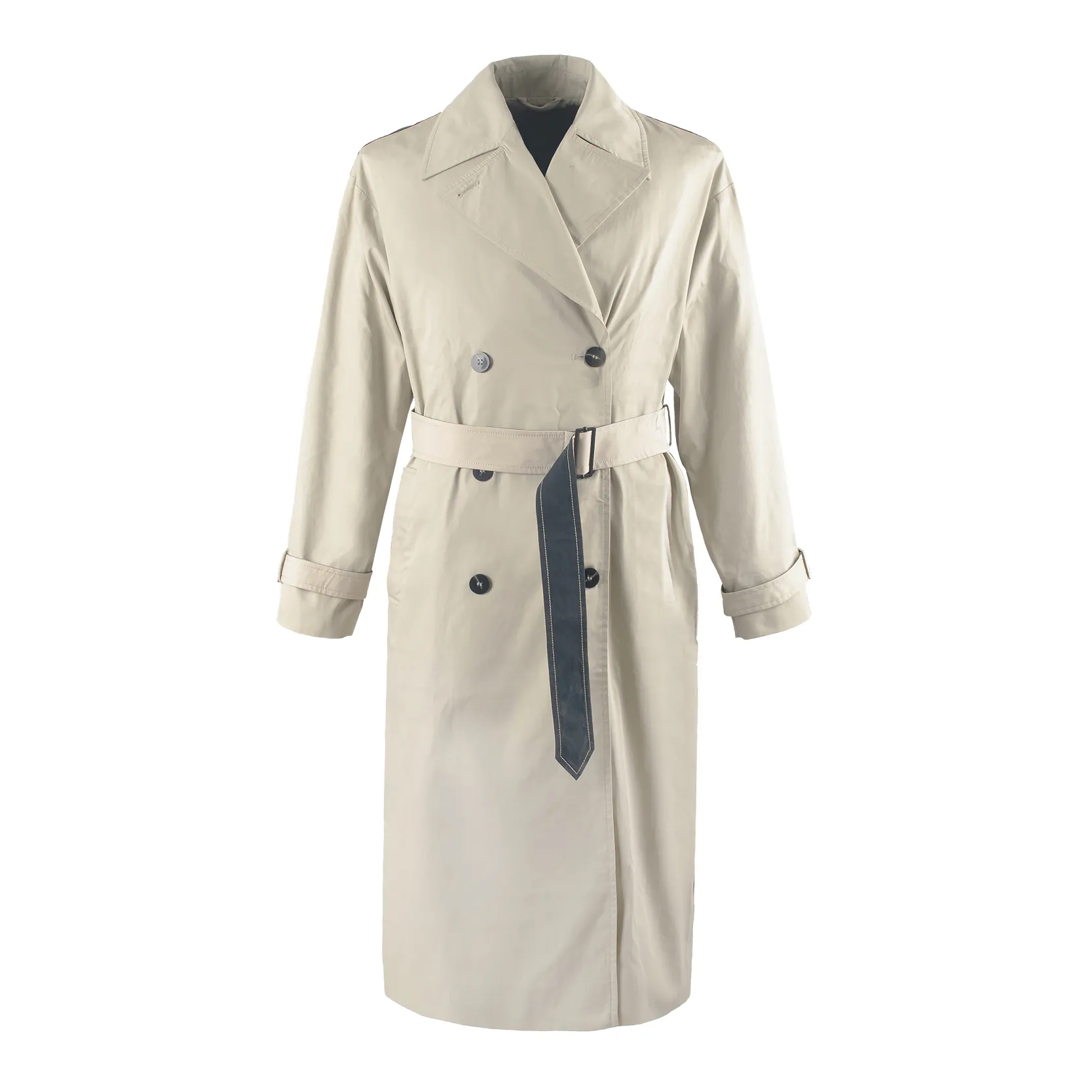
I’ve handled my share of trenches in showrooms and sample rooms, and this one stands out—khaki front, black back, quiet confidence. It’s windproof, properly warm, and (to be honest) looks more expensive than it is. Many customers say the waist definition feels “tailored,” which, in a world of boxy fits, is refreshing.
Industry trend check
- Function-first fashion: DWR finishes and wind-blocking plackets are now standard, not “techwear only.”
- Contrast blocking is back: the khaki/black split feels editorial yet wearable.
- Responsible sourcing: buyers ask for OEKO-TEX fabrics and factory audits as table stakes.
Key specs at a glance
| Product | Women’s Double Breasted Trench Coat |
| Silhouette / length | Classic double-breasted, midi (≈110 cm) |
| Shell fabric | Cotton-rich twill 60/40 (cotton/poly), ≈280 gsm, PFC-free DWR |
| Lining | Recycled polyester taffeta, ≈70 gsm |
| Closure | 8-button double-breasted front, storm flap, tie belt |
| Features | Windproof front placket, back vent, slant welt pockets, contrast khaki/black panels |
| Sizes / fit | XS–2XL; tailored regular fit (real-world use may vary by body type) |
| Care | Machine wash cold; reproof DWR after ≈20 washes |
| Service life | ≈3–5 years urban wear; longer with reproofing |
| Origin | No.448, Heping West Road, Xinhua District, Shijiazhuang, Hebei, China |
How it’s made (short version)
Materials are lab-tested, then pattern-graded, cut on semi-automatic spreaders, stitched with 8–10 spi for clean seams. Stress points bar-tacked. Buttons are cross-stitched; belt loops reinforced. DWR is pad-applied and cured; every batch gets in-house QC plus third-party spot checks.
Testing & certifications
- Water repellency: AATCC 22, spray rating ≈ 80–90 after 5 washes [1]
- Abrasion: ASTM D4966 Martindale ≈ 30,000 cycles, shell twill [2]
- Colorfastness: ISO 105 C06 (washing) grade 4–5; X12 (rubbing) grade 4 [3]
- Seam strength: ASTM D1683 meets ≥ 180 N on main seams
- Factory: ISO 9001:2015 QMS; BSCI-audited; fabrics OEKO-TEX Standard 100 class II where specified [4][5]
Where it works best
- City commuting and travel (windy platforms, light drizzle)
- Retail uniforms, boutique hospitality, film wardrobe pulls
- Smart-casual meetings—over knits, suiting, or denim
Customers mention the pockets are “actually usable” and the belt sits at a natural waist—small details that, surprisingly, change daily wearability.
Vendor snapshot (approximate buyer-facing data)
| Vendor | MOQ | Lead time | Certs | Customization | Unit price |
|---|---|---|---|---|---|
| JIDE Garment (origin address above) | ≈300 pcs/style | 35–45 days after PPS | ISO 9001, BSCI, OEKO-TEX fabrics | Fabric/trim, fit, branding, color-block | Mid-market, value-focused |
| Fast-fashion aggregator | ≈600 pcs/style | 20–30 days | Basic QA, limited audits | Limited palettes, stock buttons | Lower, but variable durability |
| EU premium house | ≈150 pcs/style | 60–90 days | ISO, SMETA, expanded CSR | High—bespoke trims, special dye | High |
Customization and ordering
Available for private label: change fabric weight, lining hand-feel, horn-effect buttons, buckle hardware, and logo placements. Typical process flow: design brief → counter-sample (7–10 days) → PPS with sealed measurements → production → third-party AQL 2.5. To be honest, locking fabric early avoids most timeline hiccups.
Mini case study
A boutique hotel chain commissioned a Women’s Double Breasted Trench Coat uniform capsule (khaki outer, tonal black belt). After 6 months, staff reported better warmth on windy entrances and fewer missing buttons—bar-tacks did their job. Returns dropped ≈18% versus prior coat issue.
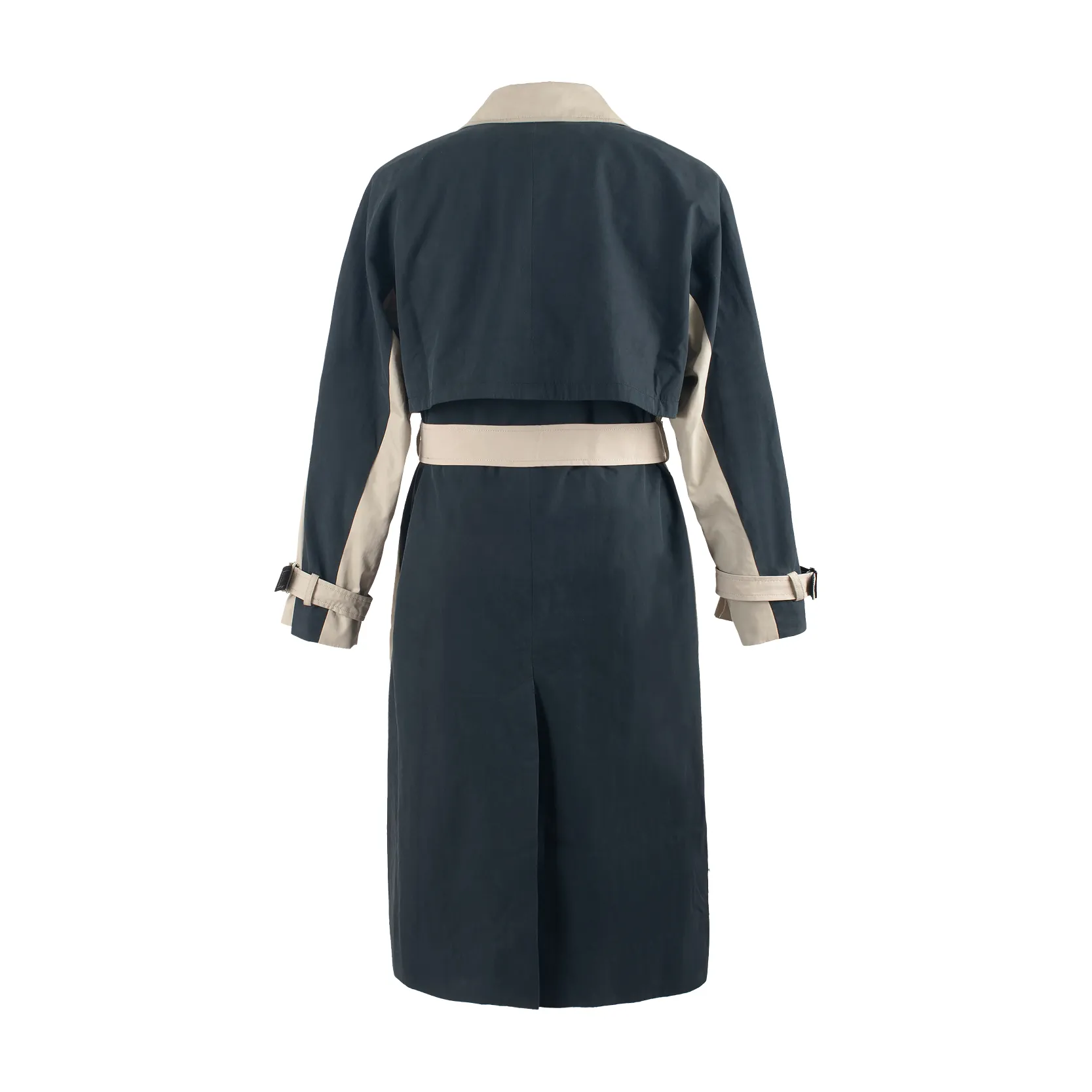
If you value a polished silhouette with practical tech, the Women’s Double Breasted Trench Coat hits a sweet spot—editorial enough for campaigns, durable enough for real commutes.