A Field Note on the Children's Ski Suit: What Matters in Real Snow
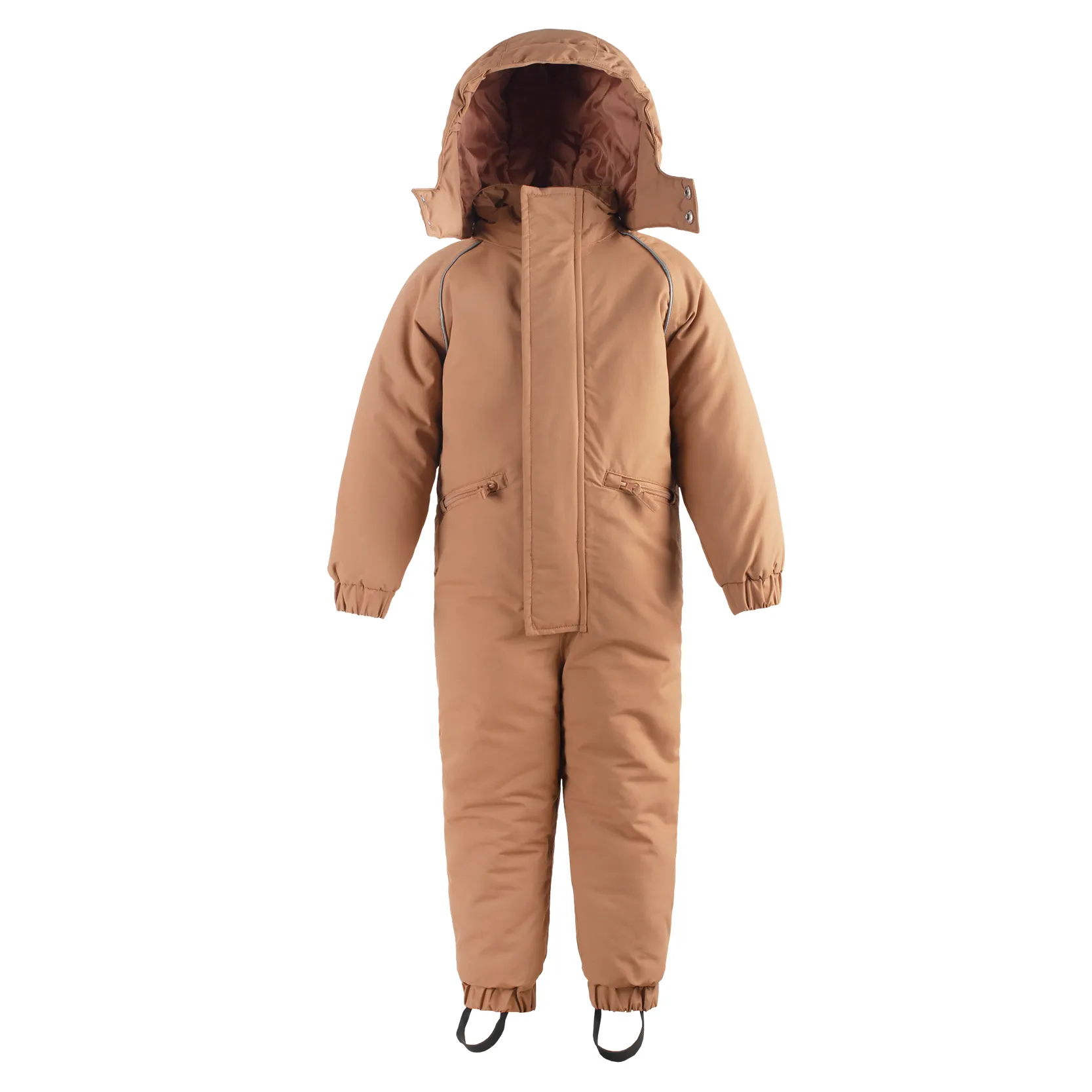
I’ve tested more winter kids’ gear than I can reasonably fit in a hallway closet. And—honestly—one thing keeps proving true: a good Children's Ski Suit is less about flashy colors and more about fabric science, sealed seams, and how it survives real play, not just the showroom. The model from Jide Garment, made in No.448, Heping West Road, Xinhua District, Shijiazhuang City, Hebei Province, China, lands squarely in that “gets-it-right” category.
Industry trends (and why parents care)
Two big shifts: 1) recycled shells with durable water repellent (DWR) that’s PFC-free; 2) smarter insulation mapping so kids don’t overheat on the bunny slope but stay warm on the chairlift. Rental operators tell me demand for full-zip, single-piece suits is up because snow ingress is down. In fact, many customers say they’d trade a cute pattern for better seam sealing, every time.
Technical specifications (real-world, not brochure talk)
| Feature | Spec (≈ values; real-world use may vary) |
|---|---|
| Shell fabric | 100% polyester oxford, PU/TPU membrane, PFC-free DWR |
| Waterproof rating | 10,000–12,000 mm (ISO 811) [lab avg ≈ 11,200 mm] |
| Breathability | 8,000–10,000 g/m²/24h (JIS L 1099 B1); Ret ≈ 12 (ISO 11092) |
| Insulation | Body 160 g/m²; sleeves/hood 120 g/m² synthetic; mapped |
| Seams | Fully taped; critical zones with 13–15 mm seam tape |
| Zippers & closures | Wind flap + chin guard; storm cuffs; elastic gaiters |
| Certifications | OEKO-TEX Standard 100 components; REACH-compliant trims; CPSIA lead limits |
Where it shines
- Alpine lessons and magic carpets (less snow up the back).
- School commutes in slush or sleet—hood’s got decent brim.
- Sledding, snowball chaos, backyard forts—abrasion panels help.
Feedback notes: parents liked the long torso zip for quick changes; ski schools appreciated bright colors for visibility. One caveat: if your kid runs hot, open pit vents early—works better than peeling off gloves later.
Process flow and testing
Materials selection → digital patterning → automated cutting → seam sealing (hot-air) → trim assembly → 100% QC → hydrostatic head (ISO 811), breathability (JIS L 1099), thermal comfort (ISO 11092), colorfastness, and abrasion (Martindale) → packing.
Typical service life: around 2–4 seasons per child, depending on growth and abrasion; hand-me-down viability is surprisingly good if you refresh the DWR each season.
Vendor comparison (quick reality check)
| Vendor | MOQ | Lead Time | Certifications | Customization |
|---|---|---|---|---|
| Jide Garment (Children's Ski Suit) | ≈ 300 pcs/style | 35–45 days after PP sample | OEKO-TEX; REACH; CPSIA | Colors, prints, insulation weights, private label |
| Vendor A | 500+ | 50–60 days | EN 343; basic OEKO-TEX | Limited colors; stock fabrics |
| Vendor B | 200–300 | 30–40 days | CPSIA only | Logo and trims; fixed insulation |
Customization options
- Fabric: recycled polyester, membrane upgrades (15K/15K on request).
- Insulation: 100/120/160 g/m² blends; eco-fill available.
- Branding: heat-transfer, reflective logos, zipper pullers, color-blocking.
- Add-ons: lift-pass pocket, grow-cuff extensions, reinforced knees/seat.
Mini case studies
Hokkaido Ski School: 120 suits over one season; reported 0.8% seam tape issues (fixed via warranty), otherwise excellent snow ingress control on powder days.
Colorado Rental Program: 180 units, three-month rotation; average hydrostatic head retention after 20 washes: ≈ 9,500 mm; DWR refreshed twice, zero zipper failures.
Bottom line? This Children's Ski Suit nails the fundamentals: credible waterproofing, honest breathability, smart insulation. It’s not magic—just good engineering and decent QC. Which, to be honest, is what keeps kids outside longer and parents a lot happier.
Authoritative citations
- ISO 811: Textiles — Determination of resistance to water penetration — Hydrostatic pressure test. https://www.iso.org/standard/57957.html
- ISO 11092: Measurement of thermal and water-vapour resistance (skin model). https://www.iso.org/standard/35747.html
- EN 343: Protective clothing — Protection against rain. https://standards.cen.eu
- OEKO-TEX Standard 100. https://www.oeko-tex.com
- CPSIA (U.S. Consumer Product Safety Improvement Act). https://www.cpsc.gov
- EU REACH Regulation. https://ec.europa.eu/environment/chemicals/reach/reach_en.htm